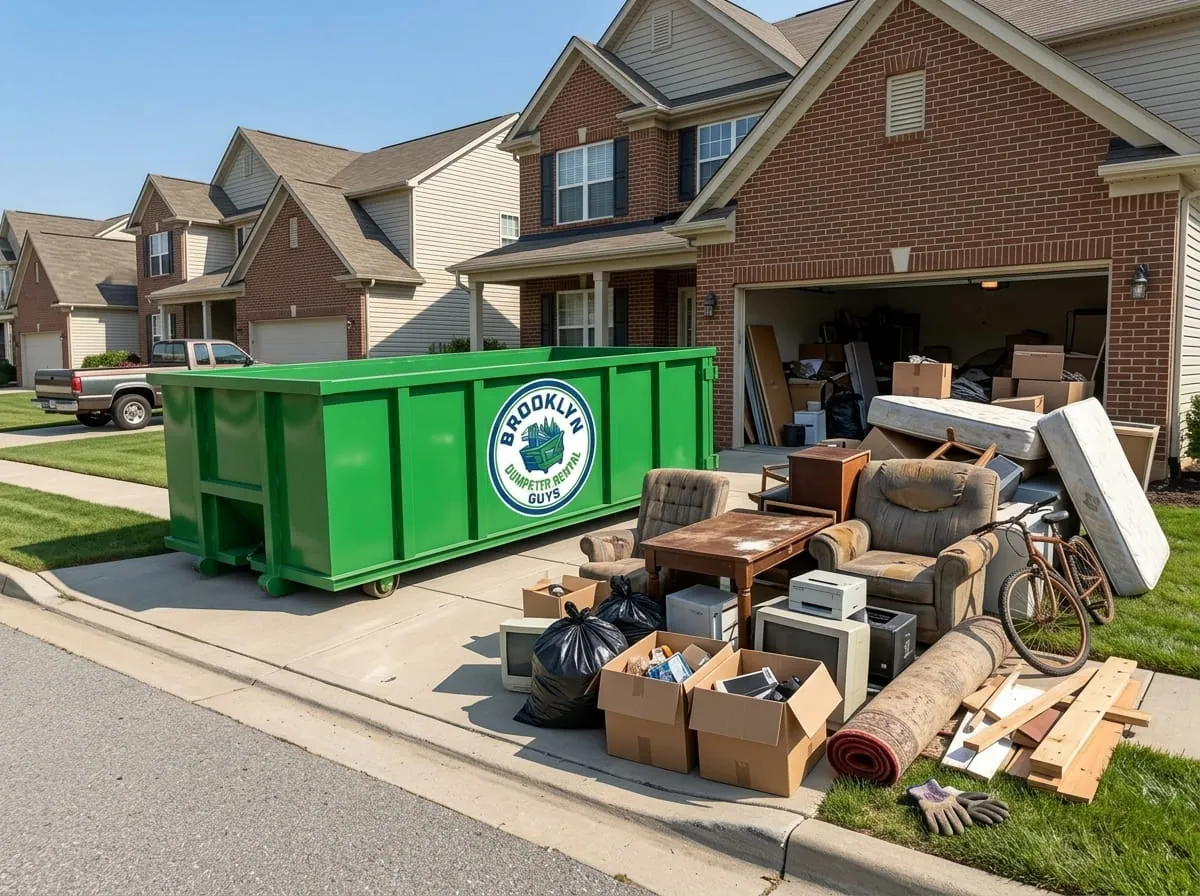
After years of dropping roll-off dumpsters on Brooklyn blocks, from Bay Ridge walk-ups to Bed-Stuy brownstones, the single question we field more than any other is simple: what size do I actually need? It sounds basic, but in a borough where a driveway is a luxury and your container is usually sitting on the street in front of your building, getting the size right is the difference between a smooth job and a pile of headaches. Order too small and you are paying for a second haul. Order too big and it either will not fit on your narrow block or it sits half-empty while you burn money on a permit. This guide walks you through the four sizes we run most, what each one really holds, the weight limits nobody warns you about, and how we match a bin to the job here in Kings County.
The Four Roll-Off Sizes You Will Actually Use
Roll-off dumpsters are measured in cubic yards, which describes volume, not weight or footprint. A "yard" is one cubic yard of space (3 feet by 3 feet by 3 feet). When we quote a 10-yard bin, we mean it holds roughly ten of those cubes. Here is the honest breakdown of the sizes we deliver across Brooklyn, with the real-world dimensions you should plan your street or curb space around.
| Size | Typical Dimensions (L x W x H) | Holds (pickup truck loads) | Best For |
|---|---|---|---|
| 10-yard | 12 ft x 8 ft x 3.5 ft | ~3 loads | Bathroom reno, small cellar cleanout, heavy debris |
| 15-yard | 16 ft x 8 ft x 4 ft | ~4-5 loads | Single-room gut, flooring, mid-size cleanout |
| 20-yard | 22 ft x 8 ft x 4.5 ft | ~6 loads | Multi-room reno, roof tear-off, whole-apartment cleanout |
| 30-yard | 22 ft x 8 ft x 6 ft | ~9 loads | Full brownstone gut, new construction, large demolition |
Notice that the 20 and 30-yard bins share nearly the same footprint on the ground. The 30 is taller, not longer. That matters in Brooklyn because your limiting factor is almost always the length of curb you can legally and physically occupy, not the height. If you have room for a 20, you usually have room for a 30, so if the debris is light and bulky, size up.
Why Smaller Bins Rule in Brooklyn
In most of the country, contractors default to a 20 or 30-yard container and drop it in the driveway. Brooklyn does not work that way. Driveways are rare, blocks are narrow, and cars are parked bumper to bumper. That is why the 10 and 15-yard bins are our most popular rentals by a wide margin. A 10-yard container is short enough to squeeze into a single parking-spot length of curb, which is often all you can clear on a residential street in Park Slope or Sunset Park.
The compact bins also load easier. Their lower walls (3.5 to 4 feet) mean you are lifting debris up and over a manageable edge, which matters a lot when you are hauling out of a walk-up or a below-grade cellar. On a tight one-way street, a smaller truck delivering a smaller bin has a far better shot at maneuvering than a large hook-lift trying to place a 30-yarder. When in doubt on a narrow block, we steer people toward two 10-yard swaps rather than one oversized container that cannot be placed. If you are unsure what your street can handle, our roll-off dumpster rental team can look at your block before you commit.
Weight Limits and Overage Fees: The Part That Surprises People
Volume is only half the equation. Every dumpster comes with a weight allowance, usually measured in tons, and going over it triggers overage fees, typically charged per additional ton. This is where Brooklyn homeowners get burned, so pay attention.
- A 10-yard bin usually includes 1 to 2 tons of weight.
- A 15-yard bin runs around 2 tons.
- A 20-yard bin includes roughly 2 to 3 tons.
- A 30-yard bin includes about 3 to 4 tons.
Those allowances are generous for light material like drywall, cabinetry, and household junk. They disappear fast under heavy debris. A cubic yard of concrete weighs well over a ton on its own. This is the number-one reason people blow their budget: they fill a big bin with something dense and get hit with a haul-back and an overage bill that dwarfs the rental. For a full breakdown of how pricing and weight interact locally, see our guide to dumpster rental cost in Brooklyn.
Heavy Debris Needs a Small Bin
This is counterintuitive, so let me be blunt: if you are throwing out concrete, brick, dirt, stone, or asphalt roofing shingles, you want the smallest bin, not the biggest. A 10-yard container is the correct choice for a demolished patio, a broken sidewalk, an excavated backyard, or a shingle tear-off. Fill a 10-yard with concrete and you are already at or near the weight limit while the bin looks half empty. If you dropped that same material into a 30-yard, you would never fill it by volume, but you would owe for four or five extra tons. We often run dedicated "heavy" 10-yard bins for exactly this reason, and we will tell you upfront if your material qualifies. Not sure what counts as heavy or what is even allowed? Our overview of what can go in a dumpster spells it out.
Matching the Size to Your Brooklyn Job
Here is how we size real projects we see every week across the borough.
Bathroom Remodel
A single bathroom gut, tile, tub, vanity, and drywall, fits comfortably in a 10-yard bin. The tile and old cast-iron tub add weight, so the smaller bin keeps you honest. This is the classic case where 10 yards is not just enough, it is ideal.
Kitchen or Single-Room Renovation
Pulling cabinets, countertops, flooring, and drywall from a kitchen usually calls for a 15-yard bin. There is more bulky material than a bathroom but rarely enough dense debris to worry about weight. A 15 gives you breathing room without eating extra curb space.
Whole-Apartment or Multi-Room Reno
Renovating an entire apartment in a co-op or condo, several rooms of flooring, walls, fixtures, and old furniture, is a job for a 20-yard container. That said, check whether your co-op board or building management has rules about street placement and hours before you book. Many do. Our residential dumpster rental service is built around these building-specific quirks.
Full Brownstone Gut Renovation
Gutting a whole brownstone, multiple floors down to the studs, is the one Brooklyn job that genuinely justifies a 30-yard bin, or more realistically a series of swap-outs. Because you cannot always fit a 30 on a narrow block, we frequently schedule staged 20-yard deliveries: fill one, we haul it, we drop the next. This keeps the workflow moving without needing curb space you do not have. For heavy demolition phases, we mix in a 10-yard heavy bin for the plaster and masonry. This kind of phased approach is the core of our construction dumpster rental work.
Roof Tear-Off
Asphalt shingles are heavy. A typical Brooklyn row-house roof (one to two layers) tears off into a 10 or 15-yard bin, sized for weight, not volume. Never put shingles in a 30-yard bin expecting to fill it; you will hit the weight ceiling long before the volume ceiling.
Cellar and Basement Cleanouts
The Brooklyn cellar cleanout is its own category. Decades of stored junk, old furniture, boxes, and appliances are bulky but relatively light. A 15 or 20-yard bin handles most cellar cleanouts, and the extra volume matters because this stuff does not compact well. The low-walled bins also make it easier to load as you carry items up a narrow cellar stair.
Street Placement and the NYC DOT Permit
This is the Brooklyn-specific step that trips up out-of-towners and first-timers. If your dumpster is going on the street, and in most of the borough it has to, you generally need a permit from the NYC Department of Transportation. Placing a container on a public street without one can mean a violation or the bin being tagged. On private property, like a rare driveway or a construction site, the rules differ.
We help walk customers through what their specific block requires, since rules vary by street type, hydrant proximity, bus routes, and parking regulations. Factoring the permit into your timeline is important, so do not order a same-day bin expecting to legally park it on the street without doing this homework first. It is also another argument for a smaller bin: less curb occupied, fewer parking spaces displaced, and an easier placement overall.
A Quick Sizing Cheat Sheet
- Heavy material (concrete, dirt, shingles, brick): go 10-yard, always.
- One small room (bathroom): 10-yard.
- One larger room (kitchen, flooring): 15-yard.
- Multiple rooms or whole apartment: 20-yard.
- Full brownstone gut or new construction: 30-yard or staged swaps.
- Narrow block with no room: default to the 10-yard and plan a second swap if needed.
When people cannot decide between two sizes and the material is light, we usually suggest sizing up one step, because the cost gap between adjacent sizes is small compared to the cost of a second delivery. But if the material is heavy, do the opposite and size down to protect yourself from overage fees. That single rule of thumb, light means size up, heavy means size down, will save most Brooklyn homeowners from the two most expensive mistakes.
Still Not Sure? Call Us Before You Book
There is no substitute for a two-minute conversation about your actual job and your actual block. Tell us what you are throwing out, roughly how much, and where you want the bin, and we will tell you the right size and whether your street can take it. We have placed thousands of containers across Brooklyn and we know which blocks fit a 20 and which barely fit a 10. Take a look at our full list of services, or just pick up the phone and talk to a local who knows the borough. Call Brooklyn Dumpster Rental Guys at (929) 552-9998 or reach out here and we will get the right bin on your block, permit guidance included.
Owner, Brooklyn Dumpster Rental Guys — sharing straight advice from years of local hauling across Brooklyn and Kings County.
Frequently Asked Questions
What is the most popular dumpster size in Brooklyn?
The 10 and 15-yard bins are by far our most popular rentals in Brooklyn. Because driveways are rare and blocks are narrow, smaller containers fit on the street more easily, load better from walk-ups and cellars, and take up less curb space. We only steer people toward 20 or 30-yard bins when the job and the block genuinely call for it.
Why should I use a small dumpster for concrete or shingles?
Heavy materials like concrete, dirt, brick, and asphalt shingles hit the weight limit long before they fill the volume. A single cubic yard of concrete can weigh over a ton. A 10-yard bin is the right choice for heavy debris because you will reach the weight allowance while the bin still looks half empty. Using a bigger bin just means paying costly overage fees for extra tonnage.
Do I need a permit to put a dumpster on the street in Brooklyn?
In most of Brooklyn, yes. If your container sits on a public street, you generally need a permit from the NYC Department of Transportation. Placing a bin without one can lead to a violation. Rules vary by block based on hydrants, bus routes, and parking regulations, so we help customers understand what their specific street requires before delivery.
What size dumpster do I need for a brownstone gut renovation?
A full brownstone gut technically calls for a 30-yard bin, but many narrow blocks cannot accommodate one. In those cases we schedule staged 20-yard swap-outs: fill one, we haul it, we drop the next. We often mix in a 10-yard heavy bin for plaster and masonry so you do not blow the weight limit on the main container.
How do I choose between two dumpster sizes?
Follow one rule: if your debris is light and bulky, size up, because the price gap between adjacent sizes is small compared to paying for a second delivery. If your debris is heavy and dense, size down to protect yourself from overage fees. When you are still unsure, call us at (929) 552-9998 and we will match the bin to your job and your block.