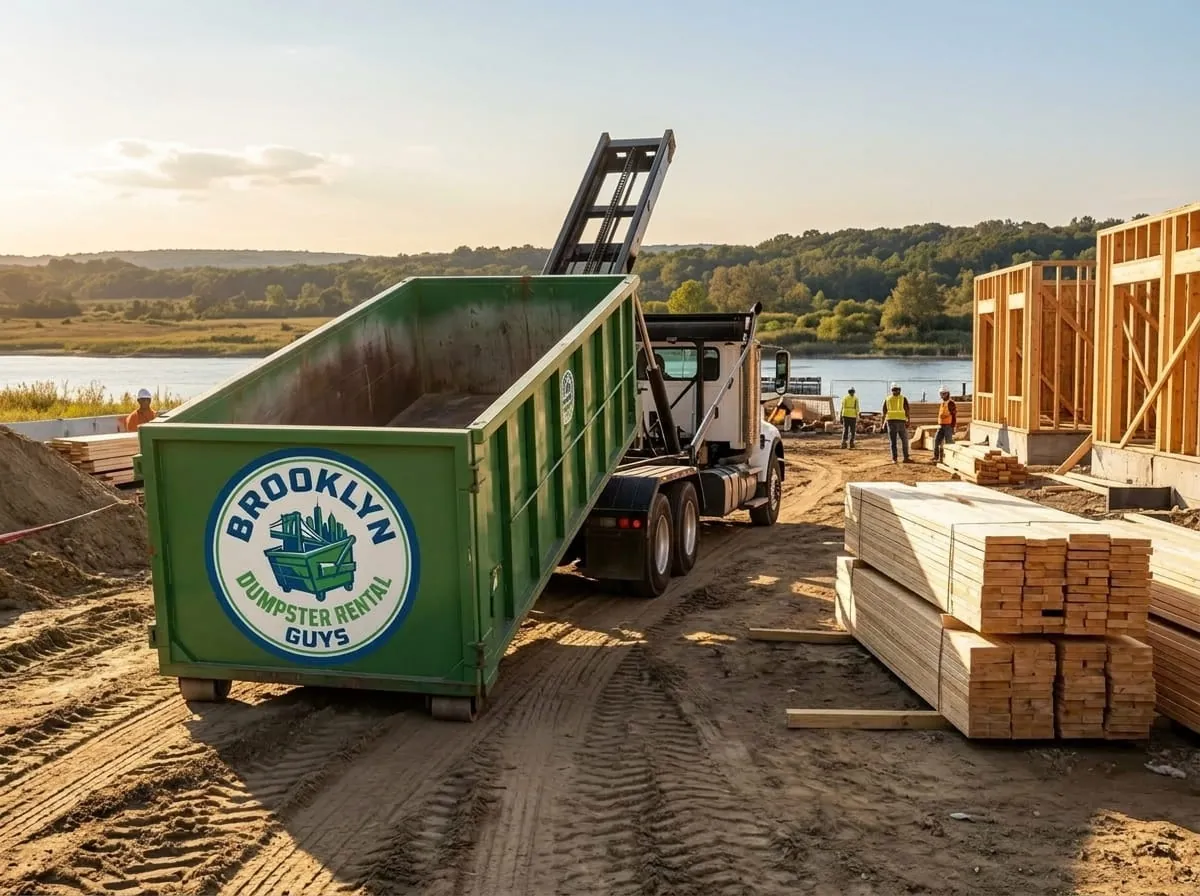
A roll-off dumpster can weigh several tons empty, and once you load it with roofing, plaster or renovation debris it can push well past ten tons concentrated on a handful of steel contact points. That kind of weight, dragged and dropped onto a surface for a week or more, is exactly what cracks a concrete pad or gouges a strip of asphalt. The good news is that nearly all of that damage is preventable with a little plywood, some planning and a driver who knows the block. At Brooklyn Dumpster Rental Guys we place containers across Kings County every day, and the vast majority of our drops are on the street, not a private driveway, because most Brooklyn homes simply do not have one. This guide covers both situations so your rental ends with a clean pickup and no surprise repair bill.
Why Dumpsters Damage Surfaces in the First Place
Understanding the mechanism makes prevention obvious. A roll-off does not sit on flat feet. It rests on two long rear rails and a set of small rear wheels, and when the truck sets it down or picks it up, the container tips and rolls on those wheels while the front end scrapes forward. Every pound of the load transfers through those few narrow contact strips. On a hot day that pressure sinks into softened asphalt like a boot in wet sand. On a cold day the same load stresses concrete that already has micro-cracks from winter freeze-thaw. Add the dragging motion of loading and unloading off the truck bed and you have three separate ways to mark a surface: point-load pressure, scraping, and heat or cold making the material weaker to begin with.
If You Have a Private Driveway or Parking Pad
A private driveway is a luxury in most of Brooklyn, but if you have one in an area like Marine Park, Gerritsen Beach, Mill Basin or parts of Bay Ridge and Dyker Heights, protecting it is straightforward.
Lay Down Plywood or Boards
The single most effective step is to place sheets of plywood under every point where the container touches the ground. Use two layers of three-quarter-inch plywood, or thick planks, positioned under the rear wheels and under the full length of the rear rails. The boards spread the concentrated load across a much larger area, so instead of the weight bearing on a few square inches it is distributed across several square feet. Extend the boards a foot or two beyond where you think the wheels will land, because the exact drop position shifts a little each time the truck maneuvers.
Mind Weight Distribution and Load Balance
Do not pile all the heavy material at one end of the container. Concentrated weight over a single point is what cracks concrete. Spread heavy debris such as concrete chunks, tile or dirt evenly along the floor of the dumpster, and keep the total within the limits for your size. If you are unsure which container suits your project, our guide on what size dumpster you need walks through it, and a 10-yard dumpster is often the right call for a driveway because its smaller footprint and lower loaded weight are gentler on residential concrete.
Avoid Existing Cracks and Soft Edges
Position the container over the strongest part of the slab, away from existing cracks, control joints and the crumbling outer edge of the pad where concrete is thinnest. Never place a heavy roll-off over a septic tank lid, a buried oil line, or decorative pavers, which crack far more easily than a poured slab. If your driveway slopes, tell us in advance so the driver can set the container level and prevent it from settling or rolling.
Street and Roadway Placement: The Brooklyn Norm
Here is the reality for most of our customers: your dumpster is going in front of your building, at the curb, on a public street. Brooklyn blocks are tight, curb space is shared with your neighbors, and the asphalt and curb belong to the city, so you want to protect them just as carefully as you would your own concrete. Before anything else, make sure you are legally allowed to place it there, because the city requires a permit for a container on the public right-of-way. Read our full breakdown of whether you need a permit for a dumpster in Brooklyn before your delivery date.
Put Plywood Under the Container on Asphalt Too
City asphalt scars just as easily as your driveway, and if the roll-off gouges the road you can be held responsible for the repair. Ask us to place plywood or hardwood boards under the rear rails and wheels before the container is set down. This is standard practice on our residential jobs, and it is the difference between a clean street after pickup and a set of parallel gouges in the pavement.
Watch the Drag When the Roll-Off Comes Off the Truck
The riskiest moment for the street is delivery and pickup, when the container is winched off or onto the truck bed and rolls backward on its wheels. That motion drags across the asphalt for a few feet. An experienced driver minimizes it by positioning the truck correctly, keeping the approach square and laying boards along the path of travel. This is why the crew matters more than the equipment. Our drivers know Brooklyn streets and place containers with the drag path in mind, which is a big part of what you get when you book roll-off dumpster rental with a local team.
Protect the Curb
The curb is a common casualty because containers are often set with one rail close to it. A cracked or chipped granite or concrete curb is a city repair you do not want to fund. Keep the container squarely in the parking lane, not riding up on the curb, and use boards on any point that bears against it. On the older bluestone curbs found in some Brooklyn neighborhoods, this matters even more.
Cobblestone Streets in DUMBO and Vinegar Hill
If your project is in DUMBO, Vinegar Hill, or another pocket of historic Belgian-block or cobblestone paving, treat the surface as protected and fragile. The stones can shift, chip or sink under a loaded roll-off, and these streets are often landmarked, so damage carries extra scrutiny. Plywood is not optional here. Tell us the address is cobblestone when you book so we bring extra boards and set the container to spread its weight across as many stones as possible.
Being a Good Neighbor on a Tight Block
Street placement in Brooklyn is as much about your neighbors as it is about the pavement. A container that blocks a driveway, a hydrant or a bus stop will get you a ticket fast, and it makes for bad blood on the block.
- Never block a fire hydrant. Keep the required clearance on both sides; the FDNY and DSNY do not make exceptions.
- Stay clear of bus stops and crosswalks. These are strictly enforced and towing is common.
- Do not block a neighbor's driveway or curb cut, even partially. Give them a heads-up before delivery day.
- Leave room for foot traffic and parked cars so the sidewalk and travel lane stay usable.
- Mark the container with reflective tape or reflectors on the corners facing traffic, and keep any provided safety markings in place, especially on narrow one-way streets where visibility at night is poor.
Marking and Reflectors for Night Visibility
A dark steel box at the curb is a hazard after sunset. Reflective tape, cones or battery lights on the traffic-facing corners protect passing drivers and cyclists and reduce your liability. On Brooklyn's tighter side streets this small step prevents fender-benders and keeps you on good terms with the block.
Seasonal Damage: NYC Freeze-Thaw and Summer Heat
Winter Freeze-Thaw Cracking
New York winters put pavement through repeated freeze-thaw cycles. Water seeps into tiny cracks in asphalt and concrete, freezes, expands, and widens the crack; then it thaws and the cycle repeats. A surface that is already stressed this way is far more likely to crack under a heavy container. In winter, plywood matters even more, and you should keep the loaded weight down and avoid parking a full dumpster over a spot with standing water or an existing crack that will only get worse when it freezes.
Summer Heat and Softened Asphalt
In July and August, Brooklyn asphalt heats up and softens. A loaded roll-off left in the same spot for a week can press its wheels and rails right into the pavement, leaving permanent depressions and ruts. Boards are the fix again, because they spread the load, and if possible avoid setting a heavy container on fresh or recently patched asphalt during a heat wave, since new pavement is the softest of all.
A Simple Protection Checklist
| Surface | Main Risk | Best Protection |
|---|---|---|
| Concrete driveway | Cracking from point load | Double plywood under wheels and rails, spread the load |
| Asphalt driveway or street | Gouges and ruts, heat softening | Boards under and along the drag path, keep weight down |
| Curb | Chipping and cracking | Stay in the lane, board any contact point |
| Cobblestone (DUMBO, Vinegar Hill) | Shifting and chipping stones | Extra plywood, flag the address when booking |
Let a Local Crew Handle the Placement
Most surface damage happens because a container was dropped in the wrong spot by a crew that did not know the block. The fix is simple: work with a local team that lays boards by default, knows Brooklyn's permit rules, and places containers with the curb, the neighbors and the season in mind. Whether you need a container for a home cleanout, a gut renovation or a roofing job, our residential dumpster rental service is built for the realities of Brooklyn streets. See everything we offer on our services page, or get in touch to plan your drop.
Have questions about placement, permits or protecting a specific surface? Call us at (929) 552-9998 and we will walk you through the right setup for your address before the truck ever rolls out.
Owner, Brooklyn Dumpster Rental Guys — sharing straight advice from years of local hauling across Brooklyn and Kings County.
Frequently Asked Questions
Do I really need plywood under a dumpster on the street?
Yes. City asphalt and curbs damage just as easily as a private driveway, and if the container gouges the roadway you can be held responsible for the repair. Plywood or hardwood boards under the rear wheels and rails spread the load and prevent gouges, so we place them by default on residential jobs in Brooklyn.
My Brooklyn home does not have a driveway. Where does the dumpster go?
On the street at the curb in front of your building, which is the norm for most Brooklyn addresses. This requires a city permit for placement on the public right-of-way, so arrange that before delivery. We position the container in the parking lane, clear of hydrants, bus stops, crosswalks and neighbors' curb cuts.
Will a dumpster crack my concrete driveway?
It can if the weight is concentrated on a few contact points or piled at one end. Prevent it by laying two layers of three-quarter-inch plywood under the wheels and rails, distributing heavy debris evenly, keeping within the size's weight limit, and positioning the container away from existing cracks, joints and the thin outer edge of the slab.
What about cobblestone streets in DUMBO or Vinegar Hill?
Belgian-block and cobblestone streets are fragile and often landmarked, so the stones can shift, chip or sink under a loaded roll-off. Plywood is essential there. Tell us the address is cobblestone when you book so we bring extra boards and set the container to spread its weight across as many stones as possible.
Does weather affect the risk of pavement damage?
Very much. In winter, freeze-thaw cycles widen cracks and weaken pavement, so keep loaded weight down and avoid spots with standing water or existing cracks. In summer heat, asphalt softens and a heavy container can leave ruts, so boards are critical and it is best to avoid fresh asphalt during a heat wave.